
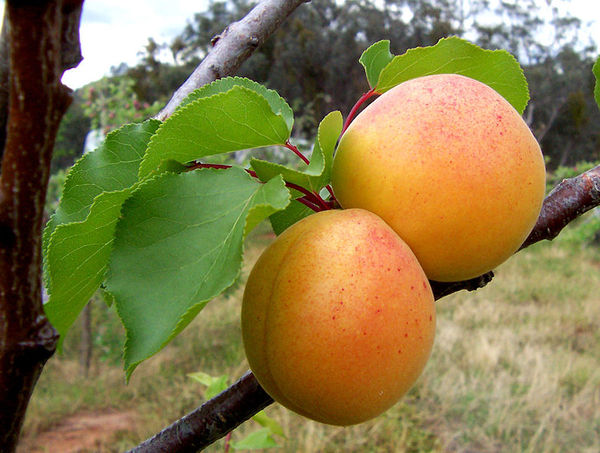
Common Name: Apricot | Scientific Name: Prunus Armeniaca

Family: Rosaceae

Chapter from Healing Plants of the Bible

Apricot

Prunus armeniaca

Rosacea

Genesis 2:9 and 17 and the tree of knowledge of good and evil, but of the tree of knowledge of good and evil, thou shalt not eat of it.

Genesis 3:6 and when the woman saw that the tree was good for food, and that it was pleasant to the eyes, and a tree to be desired to make one wise, she took of the fruit thereof, and did eat, and gave also unto her husband with her, and he did eat.

Joshua 15:53: and janum, and beth tappuah, but tappuah and aphekah.

Joshua 17:8 : now manasseh had the land of tappuah , but tappuah on the border of manasseh belonged to the children of ephraim.

I Chronicles 2:43 and the sons of hebron, korah, and tappuah ,

Proverbs 25:11 a word fitly spoken is like apples of gold in pictures of silver.

Song 2: 3 and 5: as the apple tree among the trees of the wood, so is my beloved among the sons. I sat down under his shadow with great delight, and his fruit was sweet to my taste comfort me with apples .

Song 7:8 the smell of thy nose like apples .

Song 8:5 I raised thee up under the apple tree

Joel 1:12 the vine is dried up, and the fig tree languisheth, the pomegranate tree, the palm tree also, and the apple tree, even all the trees of the field, are withered.

We are back to the “is it the apple or is it the apricot” debate! It is convenient that apricot follows apple alphabetically, the controversy should be fresh in your mind. Please note, the same verses are listed here as were listed in the apple chapter. Now that we are in the apricot section, I will mention why the scholars in the apricot camp are convinced it is the fruit referred to in these lines.

Scholars feel the fruit is the apricot for botanical reasons. The apple has a chill requirement, which means that it needs a certain amount of cool winter weather to produce fruit. There are only a few locations in the Holy Land that are cool enough to support apple production. The plant mentioned in the Bible would have been able to grow in a wider range of areas than those the apple would have found comfortable. Apricot culture is not confined to the north of Israel. More over, its growth habit closely fits those described in the Bible. It lives in the highlands and lowlands, from the seaside to the Galilee. The apricot literally grows in every nook and cranny of the country.

The apricot tree was thought to have been introduced into Israel before the great flood occurred. Believe it or not, there is an estimate as to when the flood occurred, roughly 2950 BC. The Noah story is based in reality and must have been a dreadful affair.

The apricot or the apple, which ever it was, appears as a fruit as well as the name of a place in the Bible. In the book of Joshua, Tapuah appears as the name of a town. More than likely this town was noted for its apple or apricot production and the people called the town after its most famous product. It would be like renaming Detroit “Car”, because they make a lot of cars there. In fact, Detroit is known as motor city or motown. Throughout the Bible you will find towns named after fruits, vegetables, spices, and for the same reasons we call Detroit “Motown”. They were centers of production.

The apricot is a kissing cousin to both the plum and the peach. The tree grows bigger than its two cousins and is a truly beautiful tree. It has reddish bark and dark green rounded leaves which make their appearance after the flowers have come and gone. The tree produces a huge amount of fruit! When I was a child our next door neighbour had an apricot tree and I can still remember the bushels and bushels of fruit it produced.

Most of us are more familiar with dried apricots than the fresh fruit. The tree has always produced more fruit than a family could consume and early in history man figured out that the apricots could be laid in the sun and dried for eating later. The Middle East is famous for its dried apricots and has been thus associated for hundreds of years. The best dried apricots come from Turkey where apricot production and drying is a science.

The apricot is native to northern China, the Himalayan region, and other parts of temperate Asia. We know that the apricots were growing in Israel by the year 3000 BC. How it made the jump from Asia remains a mystery. The Egyptians knew it and more than likely it spread from Egypt to the Holy Land. The fruit is known as mush-mush in Egypt and mish-mish in Hebrew. I once took my friend Linda Danet to Israel and mish-mish was the only Hebrew word she learned. Partly because the name made her laugh and partly because the Isreali’s make a delicious mish-mish brandy.

Historians say that Alexander the Great, King of Macedonia (356-323 BC) brought the apricot from Armenia to Greece. It was not known in Greece at the time Theophrastus was writing (372-289 BC). Dioscorides knew of it and called it Mela armeniaca, the Armenian apple. Whether Alexander introduced it or not is not known for certain, but it does appear to have arrived to Greece via Armenia. Columella and Pliny referred to it as Armeniaca which furtherly suggests its Armenian origin. It is said to have spread from there on to Rome. It then took a while for the plant to appear in Northern Europe. Henry the eighth, the man who kicked the Catholic Church out of England and had a habit of having his wives de-headed, is credited with introducing the fruit into England. The apricot does not like the northern weather which may explain why it took so long for it to move north. It only fruits occasionally in northern Europe and thus is a bit of a specimen tree more than a productive plant.

As the apricot is native to China, we ought to start our discovery of its medicinal applications on that side of the world. In China, the entire tree is considered to be medicinal, from the leaves to the roots medicines are made. There are at least ten varieties of apricot grown in China, and each attributed with its own special medicinal powers.

The flowers are thought to be generally strengthening to the body and are used to help people recover from serious illness. The tea made from the flowers is considered an excellent convalescent aid. The pink or white flowers are said to increase fertility in women and to improve their general health.

The kernels inside the fruits pit are used to treat all forms of respiratory illness, coughing, colds, bronchitis, and asthma included. They are used when a person is highly congested and in need of a decongestant. The kernel is thought to be sedative and is used in irritable and nervous coughs.

The kernel is also the source of the anticancer drug laetrile that made quite a splash in American in the 1970′s. Laetrile is made from amygdalin, a compound found in the seeds of many stone fruits. Remember, that the bitter almond seed is rich in this substance. Amygdalin is not a toxic substance in the least. But, and this is a big but, when the amygdalin breaks down chemically, the result is hydrocyanic acid. HCN as it is called in chemical circles, is a nasty and fast acting poison.

In the anti-cancer game, amygdalin was chemically removed from the pits of apricots. Once scientists had buckets of amygdalin, they set about making laetrile. Laetrile was used in cancer because in theory it was highly toxic to cancerous cells. Cancerous tissue contain an enzyme called beta-glucosidase. The laetrile was said to be absorbed by all tissues. However, in cancerous tissue, the enzyme beta glucosidase converts the laetrile into HCN which in turn killed the cancerous tissue. There are varying reports as to whether laetrile worked and opinions vary widely. It should be noted that apricot kernels are not used to treat cancer in traditional herbal medicine and they never have been. One must raise an eyebrow when a plant is being used for untraditional purposes.

The bark of the tree is also used to treat coughs and respiratory complaints. More over, the Chinese say that the root bark of the tree counteracts the poisoning that occurs when too many apricot seeds are ingested. They feel that the parts of the tree above ground act in an opposite manner to those below ground. Oddly enough, the ability of the root bark to counteract apricot pit poisoning has been proven in the lab.

The Europeans did not overlook the medicinal applications of this plant. For the most part the fruit was the part used in medicine. Gerard has this to say about them, “Apre-cocks are cold and moist in the second degree, but yet not so moist as peaches, for which cause they do not so soone or easily putrifie, and they are also more wholesome for the stomacke, and pleasant to the taste, and full of excretements; being first eaten before other meate they easily descend, and cause the other meates to passe downe the sooner, like as also the peaches do.” Gerard, like most herbalists, suggest apricots for constipation. In his day, constipation was thought be caused by dried out intestines, the solution was to add a moistening drug. Gerard felt that eating apricots would moisten the intestines and result in bowel movements. Anyone that has eaten a few too many dried apricots will agree with the very dead Gerard.

Dried apricots are an old fashioned treatment for constipation and along with prunes, represent a gentle cure. Apricots work as a mechanical or bulk laxative. The colon is a U-shaped tube and its function is simple. When used food materials enter it, contractions are stimulated. Material entering the ascending colon hit an on button and the colon is stimulated into action. Once the colon is turned on, it gently contracts, pushing the contents along until they hit the anus. What gets dumped into the colon is the left overs from the digestive process, items that the body cannot absorb. Fibre is indigestible and passes from the mouth to the colon unmolested by the digestive process. Modern people eat refined foods that have little fibre left in them. Its all been processed out. This means that the colon does not get enough material entering it to activate the on button. Bulk laxatives are food stuffs that are rich in fibre. Eating apricots results in a hefty dose of material entering the colon which results in contraction of the colon and subsequent defecation.

The Israelites had to preserve food to exist upon during the winter and apricots would have been dried in great quantities. No doubt they were used to treat the constipation that invariably occurred during the green-less winter months. Apricots can still be used to treat constipation and as they work as a bulking agent, there is no need to worry about laxative dependence. Laxative dependence occurs with laxatives like aloe that work by affecting the nerves of the colon. This is a great addition to the diet of anyone with a constipation problem.


COPYRIGHT 2010 DoctorSchar.com